Psychological Testing
ADHD & Neuropsychological Testing in the South Bay
Neuropsychological testing is a structured assessment of how the brain is working, covering attention, memory, learning, processing speed, and executive function, that produces a clear answer and a detailed report. At Bodhi Wellness Collective, evaluations are performed by a licensed clinical neuropsychologist, which is not true of every practice that offers testing.

- Licensed clinicians
- In person and virtual
- Free 15-minute consultation
- Accepting new clients

We are a South Bay practice, based on Pacific Coast Highway in Hermosa Beach, and we evaluate adults, teens, and children from Manhattan Beach, Redondo Beach, Hermosa Beach, El Segundo, Torrance, and Palos Verdes.
Who performs your evaluation
Evaluations are conducted by Dr. Daniel Hai, PsyD, a California licensed psychologist and clinical neuropsychologist with more than ten years of assessment experience. He completed postdoctoral training in neuropsychology and is a member of the National Academy of Neuropsychology.
His particular expertise is in complex presentations, where cognitive, emotional, developmental, personality, and medical factors overlap and the picture is not obvious. Much of that experience comes from residential treatment settings, working with people carrying multiple diagnoses, complicated histories, and symptoms with several possible explanations. More about Dr. Hai and our clinical team.
What testing can clarify
- ADHD, and whether attention difficulties are better explained by something else
- Autism spectrum differentials
- Learning differences and academic struggles
- Attention, executive functioning, and processing speed
- Memory concerns
- Mood and personality functioning
- Trauma-related conditions
- Cognitive changes associated with medical or neurological conditions
Why the differential matters
Attention problems are a common final pathway for a long list of causes. Anxiety fragments attention. Depression slows processing. Poor sleep looks almost identical to ADHD on a symptom checklist, and so do thyroid dysfunction, chronic stress, and unprocessed trauma.
Sorting between them is the entire value of a proper evaluation, and it is where a neuropsychologist's training does work that a checklist cannot. That distinction also determines treatment: an anxiety-driven attention problem treated with a stimulant often gets worse. If you want a fuller picture of what an evaluation involves, we wrote about adult ADHD testing and what to expect.
Two levels of evaluation
| Focused diagnostic evaluation | Comprehensive neuropsychological evaluation |
|---|---|
| A relatively clear clinical picture | Complicated or overlapping presentations |
| Clinical interview and rating scales | Full cognitive testing across domains |
| Partially rules out other causes | Thoroughly rules out other causes |
| Brief written summary | Detailed report suitable for accommodations |
| Clarity and a treatment direction | Documentation, complex history, prior treatment failure |
Which one fits depends on the question you need answered. We confirm that on the consultation rather than defaulting everyone to the most extensive option.
Specialized evaluations
Beyond diagnostic assessment, Dr. Hai's experience includes fitness-for-duty, disability, academic and testing accommodations, conservatorship, and professional competency evaluations, including high-stakes evaluations involving physicians, surgeons, clergy, and other licensed professionals. If you need an evaluation for one of these purposes, say so at the consultation, because the scope and the report differ considerably from a standard diagnostic assessment.
What to expect
We begin with a free 15-minute consultation to understand what you need answered. The evaluation itself involves structured assessment sessions, followed by scoring, a written report, and a feedback session to walk you through what the findings mean and what to do with them.
A diagnosis is the beginning of the useful part rather than the end. Because testing sits inside a coordinated practice, findings connect directly to psychiatric care where medication may help, and to therapy or teen support where that would serve, without starting over with someone new.
Getting here
Our office, in Hermosa Beach
On Pacific Coast Highway in Hermosa Beach, a short drive from Manhattan Beach, Redondo Beach, El Segundo, Torrance, and Palos Verdes.
- Address
- 2200 Pacific Coast Hwy, Ste 308
Hermosa Beach, CA 90254 - Hours
- Monday to Friday
9:00am to 8:00pm - Can't come in?
- Virtual sessions across California
Where we are
One South Bay office.
All of California.
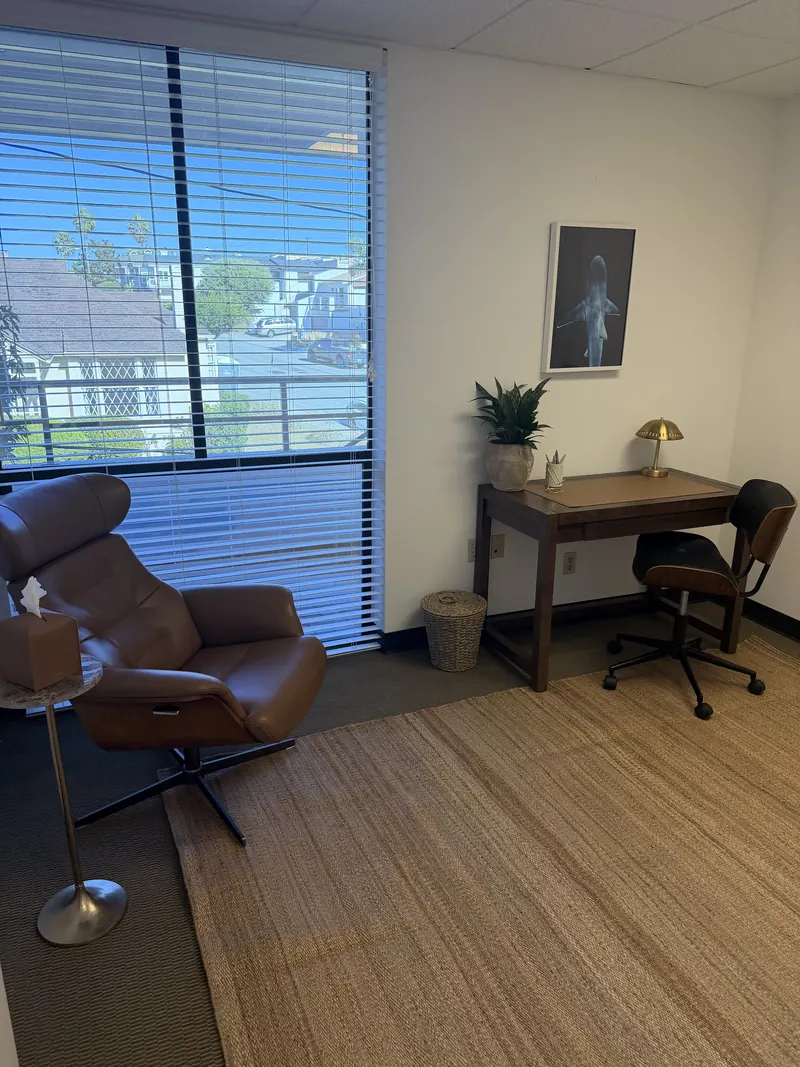
Our office is in the heart of the South Bay. Warm, private, and a world away from the clinical waiting room. For clients throughout California who can't make it in, we deliver the same uncompromising standard of care virtually.
2200 Pacific Coast Hwy, Ste 308, Hermosa Beach · Telehealth statewide
How it works
Starting is simple.
Book a free consultation
A confidential 15-minute call to understand what you need.
Get matched
We pair you with the right clinician for your goals.
Begin care
Start in person or online, at a pace that feels right.
Questions
Frequently asked
Who performs the evaluation?
Evaluations are performed by Dr. Daniel Hai, PsyD, a California licensed psychologist and clinical neuropsychologist with more than ten years of assessment experience and postdoctoral training in neuropsychology. Testing is a distinct clinical specialty, and not every practice offering it has a neuropsychologist on the team.
What is a neuropsychological evaluation?
It is a structured assessment of cognitive functions including attention, memory, learning, processing speed, and executive skills. It clarifies diagnoses such as ADHD and learning differences, distinguishes between conditions that look alike, and produces a detailed written report with practical recommendations.
How is this different from an online ADHD screener?
A screener suggests a question. An evaluation answers it. Attention problems are a common final pathway for many different causes, including anxiety, depression, poor sleep, trauma, and thyroid dysfunction. A screener cannot separate these. That distinction determines whether stimulant medication is the right treatment or the wrong one.
Do you evaluate adults, teens, and children?
Yes. Evaluations are individualized to the clinical question and to the person, and the assessment approach differs meaningfully across age groups. The consultation confirms which type of evaluation fits your situation.
Will I get a report I can use for school or work?
Yes. Comprehensive evaluations include a detailed written report suitable for schools, employers, and treatment teams, with specific recommendations. Only a formal report supports academic accommodations, workplace accommodations, or extended time on standardized testing.
What happens after testing?
You receive a feedback session and a written report. Because testing sits inside a coordinated practice, findings connect directly to therapy or psychiatric care when that is the next step, rather than leaving you to arrange it yourself.
Is testing covered by insurance?
We are a private-pay practice. We provide superbills you can submit for possible out-of-network reimbursement. Because a comprehensive evaluation is a significant expense, it is worth confirming your out-of-network benefits before scheduling.
From the blog
Further reading
When you're ready, a conversation is the place to begin.
Book a complimentary 15-minute consultation, confidential, and without obligation.
Book a free consultation