Trauma & Specialty Care
Somatic Experiencing Therapy in Hermosa Beach & the South Bay
Somatic Experiencing (SE) is a body-based approach to healing trauma and chronic stress, developed by Dr. Peter A. Levine, that works with the nervous system's fight, flight, and freeze responses rather than relying on talk alone. At Bodhi Wellness Collective in Hermosa Beach, Somatic Experiencing therapy is provided by a certified Somatic Experiencing Practitioner (SEP).

- Licensed clinicians
- Hermosa Beach + virtual
- Free 15-minute consultation
- Accepting new clients
If you understand your history but your body still reacts as if the danger never ended, you are not doing therapy wrong. Some of what trauma leaves behind lives below words: the bracing, the racing heart, the numbness, the sense of never fully settling. This page covers what Somatic Experiencing is, what a session looks like, what the research says, and how it fits with the rest of our trauma and PTSD treatment.
Key takeaways
- Somatic Experiencing is a form of somatic therapy for trauma that works with the nervous system's stress responses, not only with thoughts and memories.
- Sessions move in small, paced steps, and you do not have to retell the details of what happened.
- Early research, including a 2017 randomized controlled trial, found reductions in PTSD symptoms, though the evidence base is still growing.
- At Bodhi, SE is provided by Carissa Lane, MA, AMFT, a certified Somatic Experiencing Practitioner (SEP), in Hermosa Beach and online across California.
What Somatic Experiencing can help with
People come to Somatic Experiencing, a widely practiced form of somatic therapy, when stress or trauma seems to live in the body as much as the mind. It is often a fit for:
- Trauma and PTSD, from a single event or from years of experiences
- Anxiety and panic that show up as physical symptoms, alongside anxiety treatment
- Feeling stuck in fight, flight, or shutdown: on edge, numb, or exhausted
- Chronic stress and burnout
- Chronic pain and tension that travel with stress or trauma
- Grief and hard life transitions
- Recovery, alongside our addiction and recovery support
How Somatic Experiencing therapy works
SE starts from a simple idea: the nervous system is built to mobilize in the face of threat and to settle once the threat passes. After overwhelming experiences, that cycle can stay incomplete, and the body keeps acting as if the danger is still present. Somatic Experiencing works directly with that pattern.
Rather than going straight to the hardest memory, an SEP works in small doses, a process called titration. Attention moves between something difficult and something steadying, called pendulation, which builds the capacity to feel activation and let it settle. The aim is a wider window of tolerance, so that ordinary life feels less like a threat.
Picture someone who has spent years in talk therapy. They can explain exactly why they react the way they do, yet their shoulders still brace and their breath still catches in certain rooms. SE gives that person a way to work with the reaction itself, not only the story about it.
What a Somatic Experiencing session looks like
A session looks like a conversation with more pauses. Your clinician may ask you to notice sensations, such as tightness, warmth, or an urge to move, and to track how they shift. You stay in charge of the pace, and nothing difficult is approached before you have something steadying to come back to.
You do not need to recount every detail of what happened. Many people find this one of the most useful parts of SE, especially if telling the story has felt overwhelming before. Sessions are available at our office on Pacific Coast Highway in Hermosa Beach, a short drive from Redondo Beach, Manhattan Beach, Torrance, and Palos Verdes, and by secure video across California.
If you want to talk through whether SE fits, start with a free 15-minute consultation. All inquiries are confidential.
What the research says about Somatic Experiencing
The evidence for Somatic Experiencing is promising and still early. In the first randomized controlled trial of SE, 63 adults with PTSD received 15 weekly sessions or were placed on a waitlist, and the SE group showed significant reductions in PTSD and depression symptoms compared with the waitlist (Brom et al., Journal of Traumatic Stress, 2017).
A 2021 scoping review of 16 studies found preliminary evidence of positive effects on PTSD-related symptoms, physical and emotional symptoms, and well-being, while noting that study quality was mixed and more rigorous trials are needed (Kuhfuß et al., European Journal of Psychotraumatology, 2021). SE is not yet a first-line guideline treatment for PTSD the way EMDR and trauma-focused CBT are, which is one reason we offer it alongside them rather than instead of them.
Sources: Brom et al., Journal of Traumatic Stress (2017); Kuhfuß et al., European Journal of Psychotraumatology (2021); Somatic Experiencing International.
Somatic Experiencing, EMDR, and talk therapy
These approaches are often combined, and the right starting point depends on the person. A rough guide:
| Approach | Main focus | What you do | Often chosen when |
|---|---|---|---|
| Somatic Experiencing (SE) | The nervous system and body sensations | Track sensation and activation in small, paced steps | Trauma feels held in the body, or talking about it overwhelms you |
| EMDR therapy | Specific distressing memories | Briefly hold a memory while using guided bilateral attention | Particular events keep intruding and a structured protocol appeals |
| Individual therapy | Thoughts, patterns, and relationships | Talk through experiences and build skills (CBT, ACT, IFS, psychodynamic) | Goals are broad, patterns are ongoing, or you want support alongside other work |
Because our team works under one roof, you can move between these or combine them, for example pairing SE with EMDR, or with psychiatry when medication is part of the picture.
Your Somatic Experiencing Practitioner
Somatic Experiencing at Bodhi is provided by Carissa Lane, MA, AMFT, SEP. Carissa completed the three-year Somatic Experiencing Professional Training through Somatic Experiencing International and is a certified Somatic Experiencing Practitioner. She holds a Master of Arts in Clinical Psychology from Antioch University Los Angeles, with additional training in Polyvagal Theory and Equine Assisted Psychotherapy (EAP).
She pairs SE with Internal Family Systems (IFS) and mindfulness, so clients can work with both the body and the protective parts of themselves that formed around old experiences.
Carissa Lane is a Registered Associate Marriage and Family Therapist, AMFT No. 144999, employed by Bodhi Wellness Collective, PC, and supervised by Jack Foley, LMFT.
As Jack Foley, LMFT, our co-founder, puts it:
A lot of people come in able to explain their trauma perfectly and still feel it in their body every day. Somatic Experiencing gives us a way to work with that part directly, and it pairs well with everything else we do here.
Where we are
One South Bay office.
All of California.
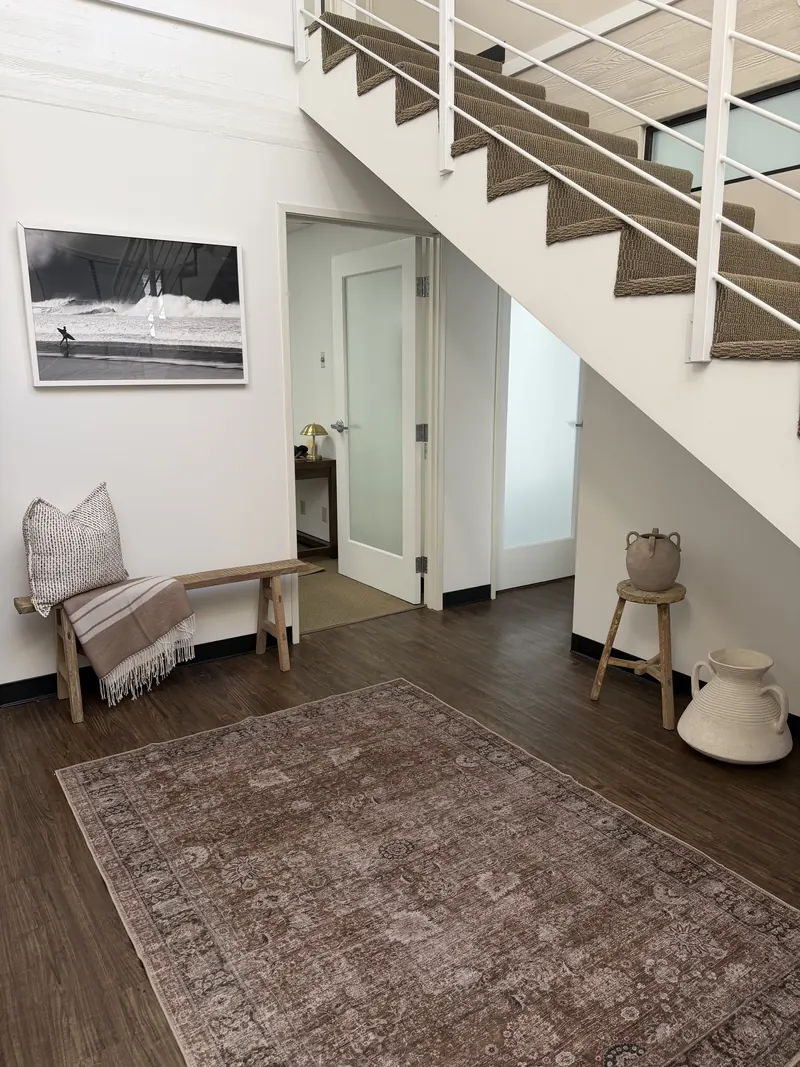
Our office is in the heart of the South Bay. Warm, private, and a world away from the clinical waiting room. For clients throughout California who can't make it in, we deliver the same uncompromising standard of care virtually.
2200 Pacific Coast Hwy, Ste 308, Hermosa Beach · Telehealth statewide
How it works
Starting is simple.
Book a free consultation
A confidential 15-minute call to understand what you need.
Get matched
We pair you with the right clinician for your goals.
Begin care
Start in person or online, at a pace that feels right.
Questions
Frequently asked
What is Somatic Experiencing therapy?
Somatic Experiencing (SE) is a body-based trauma therapy developed by Dr. Peter A. Levine. It works with the nervous system’s fight, flight, and freeze responses, in small and paced steps, rather than relying on talk alone.
What happens in a Somatic Experiencing session?
Sessions are conversational and slower than typical talk therapy. Your clinician guides your attention between body sensations and whatever helps you feel steady, in small doses. You set the pace, and you do not need to describe every detail of what happened.
Is Somatic Experiencing evidence-based?
It has a growing but still early evidence base. A 2017 randomized controlled trial found significant reductions in PTSD symptoms after 15 weekly sessions compared with a waitlist, and a 2021 review found preliminary positive evidence with mixed study quality. It is not yet a first-line PTSD guideline treatment, so we often offer it alongside EMDR or talk therapy.
What is a Somatic Experiencing Practitioner (SEP)?
SEP stands for Somatic Experiencing Practitioner, a certification from Somatic Experiencing International earned by completing a multi-year professional training with supervised practice. At Bodhi Wellness Collective, our SEP is Carissa Lane, MA, AMFT.
Do I have to talk about what happened?
No. Somatic Experiencing focuses on how your body responds now, not on retelling the story. You can share as much or as little as you want, and many people choose SE for exactly that reason.
Does Somatic Experiencing involve touch?
Somatic Experiencing does not require touch. Sessions at Bodhi Wellness Collective are done without it, through conversation and guided attention, in person or by video.
Can I do Somatic Experiencing in person or online?
Both. Sessions are available at our Hermosa Beach office at 2200 Pacific Coast Highway, a short drive from Manhattan Beach, Redondo Beach, Torrance, and Palos Verdes, and by secure video for clients anywhere in California.
Is Somatic Experiencing covered by insurance?
We are an out-of-network practice. If your plan has out-of-network benefits, it may reimburse part of the cost. We provide superbills and can help you file through Reimbursify.
When you're ready, a conversation is the place to begin.
Book a complimentary 15-minute consultation, confidential, and without obligation.
Book a free consultation