Therapy & Counseling
Anxiety Therapy in Hermosa Beach & the South Bay
Anxiety therapy is structured work with a licensed clinician to understand what keeps your anxiety going and to change it, using approaches with strong research behind them such as cognitive behavioral therapy (CBT) and exposure. At Bodhi Wellness Collective, anxiety is one of the most common reasons people come to us, and our clinicians tailor the work to the kind of anxiety you have rather than handing everyone the same worksheet.

- Licensed clinicians
- Hermosa Beach + virtual
- Free 15-minute consultation
- Accepting new clients
We see clients in person at our office on Pacific Coast Highway in Hermosa Beach, a short drive from Manhattan Beach, Redondo Beach, Torrance, and El Segundo, and by secure video anywhere in California.
Anxiety disorders are the most common mental health conditions in the country. An estimated 19.1% of U.S. adults have an anxiety disorder in a given year, and 31.1% will at some point in their lives (National Institute of Mental Health). In 2022, 18.2% of adults reported anxiety symptoms in the previous two weeks, up from 15.6% in 2019 (CDC National Center for Health Statistics, 2024).
Sources: National Institute of Mental Health; CDC National Center for Health Statistics (2024).
Signs it may be time to see an anxiety therapist
- Worry that runs most of the day and is hard to switch off, even when things are going fine
- Physical symptoms that keep coming back: a racing heart, tight chest, stomach trouble, or tension headaches
- Trouble falling or staying asleep because your mind will not slow down
- Avoiding places, people, calls, or tasks because of how they make you feel
- Needing reassurance, checking, or planning every detail before you can relax
- Panic attacks, or fear of having another one
- Anxiety starting to affect work, school, or your relationships
Physical symptoms that are new or severe, such as chest pain or shortness of breath, should be checked by a physician first. Our post on panic attacks vs. anxiety attacks explains the difference.
Everyday worry vs. an anxiety disorder
| Everyday worry | An anxiety disorder | |
|---|---|---|
| Duration | Passes once the stressor does | Persists for weeks or months |
| Intensity | Proportionate to the situation | Outsized, hard to switch off |
| Daily life | Work, sleep, and relationships continue | Disrupts sleep, focus, or connection |
| Body | Occasional tension | Frequent racing heart, restlessness, fatigue |
| Avoidance | Rare | Life starts to shrink around what feels unsafe |
Types of anxiety we treat
- Generalized anxiety (GAD): Constant worry that jumps from topic to topic
- Panic attacks and panic disorder: Sudden surges of fear and fear of the next one
- Social anxiety: Fear of judgment that shapes work, school, and friendships
- Health anxiety: Worry about illness that tests and reassurance do not settle
- Phobias: Intense fear of a specific thing, such as flying or driving
- Performance and test anxiety: Pressure that peaks at the moment it matters most
- OCD: Intrusive thoughts and the rituals used to quiet them
How anxiety therapy works here
Our clinicians draw on the approaches with the strongest evidence and choose among them based on what is driving your anxiety. Most people get a blend.
| Approach | What it works on | Often a good fit when |
|---|---|---|
| Cognitive behavioral therapy (CBT) | The worried predictions and habits that keep anxiety going | Worry is constant, or your mind jumps to the worst case |
| Exposure | Avoidance, by facing feared situations gradually and on purpose | You are working around certain places, people, or sensations |
| Acceptance and commitment therapy (ACT) | Your relationship to anxious thoughts, so they stop running the show | You have tried arguing with your thoughts and it has not helped |
| Mindfulness and nervous system skills | The physical side: breathing, tension, and the body's alarm | Anxiety shows up mostly in your body |
| EMDR or somatic experiencing | Anxiety tied to past experiences | Your anxiety traces back to something that happened to you |
When medication might make therapy more effective, we coordinate with psychiatry so the two work together. For teens, teen therapy brings parents into the plan in a way that respects their teen's privacy.
What the research says
CBT is one of the best-studied treatments in mental health. A 2018 meta-analysis of 41 randomized placebo-controlled trials, covering 2,843 patients with generalized anxiety, panic disorder, social anxiety, OCD, and related conditions, found that CBT outperformed placebo, and that the odds of responding to treatment were about three times higher with CBT (Carpenter et al., Depression and Anxiety, 2018). Results vary from person to person, and the fit between you and your therapist matters too.
Source: Carpenter et al. (2018).
The point Jack Foley, LMFT, makes most often to people starting anxiety work:
"Anxiety asks you to avoid whatever feels risky, and each time you do, the fear gets a little more convincing. Therapy is mostly about taking small, planned steps the other way, at a pace you agree to, until your body learns those situations are survivable."
What to expect
- A short first conversation. You tell us what is going on, we answer your questions, and we match you with a clinician. There is no cost for this call.
- Assessment. The first session or two map out your anxiety: what triggers it, what keeps it going, and what you want to be different.
- A plan you agree on. Your therapist explains the approach and what practice between sessions will look like.
- Weekly sessions to start. As skills take hold, many people move to every other week.
When a different first step makes sense
If drinking or drug use has become the main way you manage anxiety, our addiction treatment team can work alongside anxiety therapy. If anxiety is tangled up with low mood, depression treatment may be part of the plan. And if you are in crisis, call or text 988 any time.
If anxiety has been setting the terms of your days, reach out. You can start with a question rather than a commitment, and we will help you figure out whether working with us is the right fit.
Where we are
One South Bay office.
All of California.
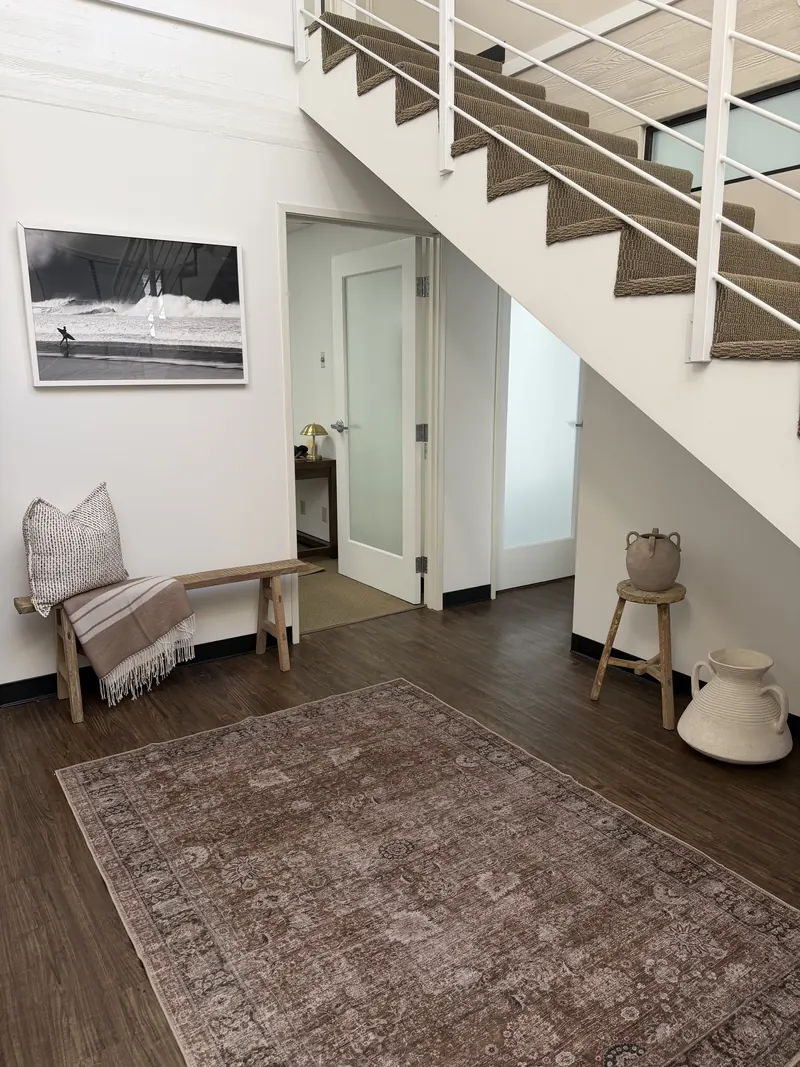
Our office is in the heart of the South Bay. Warm, private, and a world away from the clinical waiting room. For clients throughout California who can't make it in, we deliver the same uncompromising standard of care virtually.
2200 Pacific Coast Hwy, Ste 308, Hermosa Beach · Telehealth statewide
How it works
Starting is simple.
Book a free consultation
A confidential 15-minute call to understand what you need.
Get matched
We pair you with the right clinician for your goals.
Begin care
Start in person or online, at a pace that feels right.
Questions
Frequently asked
Is anxiety treatable?
Yes. Anxiety disorders are among the most researched conditions in mental health, and therapies such as cognitive behavioral therapy have strong evidence behind them. How quickly things change depends on the person and the kind of anxiety, and we talk honestly about what is realistic from the first session.
How do I find an anxiety therapist in Hermosa Beach or the South Bay?
Look for a licensed clinician who uses evidence-based methods such as CBT and exposure, who can explain how they would approach your specific kind of anxiety, and who can coordinate with a prescriber if medication becomes part of the plan. Our office is on Pacific Coast Highway in Hermosa Beach, close to Manhattan Beach, Redondo Beach, and Torrance, and we also see clients by video anywhere in California.
What is the best therapy for anxiety?
Cognitive behavioral therapy (CBT) and exposure-based approaches have the strongest research support for most anxiety disorders. Acceptance and commitment therapy (ACT), mindfulness skills, and, when anxiety is rooted in past trauma, EMDR can also help. The right approach depends on what is driving your anxiety, so we match the method to you.
What happens in a first session with an anxiety therapist?
Your therapist asks what the anxiety looks like day to day, when it started, what makes it better or worse, and what you have already tried. You will usually leave with a shared picture of what is keeping the anxiety going and a first practical step to try before the next session.
Do I need medication for anxiety?
Not necessarily. Many people do well with therapy alone. When medication might help, our clinicians coordinate with psychiatry so therapy and medication work together. Whether to start medication is always a decision you make with a prescriber.
How long does anxiety therapy take?
It varies. Focused, skills-based work for a specific fear can take a few months; anxiety that has been part of life for years, or that comes with depression or trauma, usually takes longer. Most people start with weekly sessions and space them out as things improve.
Do you treat anxiety in teens?
Yes. We work with teens and their families on school stress, social anxiety, panic, and worry that is getting in the way. Parents are involved in a way that respects the teen's privacy, and our teen therapy page explains how that works.
Can I do anxiety therapy online?
Yes. We see clients in person at our Hermosa Beach office and by secure video anywhere in California. Some people mix the two, for example starting online and moving in person for exposure work.
When you're ready, a conversation is the place to begin.
Book a complimentary 15-minute consultation, confidential, and without obligation.
Book a free consultation