Trauma & Specialty Care
Trauma & PTSD Treatment in Hermosa Beach & the South Bay
Trauma therapy is specialized work with a licensed clinician to help your mind and nervous system process an overwhelming experience, so the past stops intruding on the present. At Bodhi Wellness Collective we treat trauma and PTSD with more than one tool, including EMDR, Somatic Experiencing, and trauma-informed talk therapy, because no single approach is right for everyone.

- Licensed clinicians
- Hermosa Beach + virtual
- Free 15-minute consultation
- Accepting new clients
We see clients in person at our office on Pacific Coast Highway in Hermosa Beach, a short drive from Manhattan Beach, Redondo Beach, Torrance, and Palos Verdes, and by secure video anywhere in California.
Trauma is common. In World Health Organization surveys of adults across six continents, more than 70% reported at least one traumatic event in their lives (Benjet et al., Psychological Medicine, 2016). Most people recover with time and support. For some, the effects linger: an estimated 6.8% of U.S. adults will have PTSD at some point (National Institute of Mental Health).
Sources: Benjet et al. (2016); National Institute of Mental Health.
What trauma-informed care means here
Trauma-informed care is an approach to the whole therapy relationship, not a single technique. It starts from the recognition that past experiences shape how people react now, and it builds the work around principles described by the Substance Abuse and Mental Health Services Administration (SAMHSA), including:
- Safety. Physical and emotional safety come before anything else, including talking about what happened.
- Trust and transparency. Your clinician explains what they are doing and why, before they do it.
- Choice and voice. You decide the pace and what is on or off the table. You can pause or stop at any point.
- Collaboration. Goals are set together, not assigned to you.
- Respect for identity and culture. Your background and experiences shape the work rather than being an afterthought.
Source: SAMHSA's Concept of Trauma and Guidance for a Trauma-Informed Approach (2014).
What trauma can look like
Trauma does not always come from a single, obvious event. People come to us carrying:
- Post-traumatic stress (PTSD) from one event or many
- Intrusive memories, flashbacks, or nightmares
- Hypervigilance, anxiety, or feeling constantly on edge
- Numbness, disconnection, or difficulty trusting people
- Physical symptoms with no clear medical cause: tension, stomach trouble, exhaustion, a startle response that will not settle
- Avoiding places, people, or reminders, so that life slowly gets smaller
- The long echo of childhood or relational experiences, sometimes called attachment trauma
Kinds of trauma we treat
| Kind of trauma | What it often involves |
|---|---|
| Single-incident trauma | An accident, assault, medical emergency, or disaster |
| Complex or developmental trauma | Repeated harm or neglect, often in childhood, that shapes how you see yourself and others |
| Attachment and relational trauma | Difficulty trusting, fear of closeness or abandonment, a harsh inner critic |
| Work-related trauma | Repeated exposure on the job; see therapy for first responders |
| Traumatic loss | A sudden or violent death; see complicated grief therapy |
How we treat trauma: more than one path
Because not everyone needs the same approach, we offer several and match you thoughtfully:
| Approach | Often a good fit for | What it involves |
|---|---|---|
| EMDR therapy | Specific traumatic memories, PTSD | Reprocessing stuck memories with guided bilateral attention |
| Somatic Experiencing (SE) | Trauma held in the body; feeling stuck in fight, flight, or shutdown | Paced, body-based work with a certified Somatic Experiencing Practitioner |
| DBT skills | Overwhelming emotions, self-harm urges, or needing stability before processing | Concrete skills for distress tolerance and emotion regulation |
| Trauma-informed talk therapy | Ongoing patterns and broad goals | CBT, ACT, and psychodynamic work at a pace you set |
The World Health Organization recommends EMDR and trauma-focused cognitive behavioral therapy for adults with PTSD. Because our team is coordinated under one roof, we can combine approaches or move between them as your work unfolds, and coordinate with psychiatry when medication could help with sleep, anxiety, or depression alongside therapy.
Source: World Health Organization, Guidelines for the management of conditions specifically related to stress (2013).
Somatic Experiencing in Hermosa Beach
Somatic Experiencing (SE) therapy is a body-based approach to trauma. Instead of relying on talk alone, it works with what trauma leaves in the body: bracing, a racing heart, numbness, or never quite settling. Sessions move in small, paced steps, noticing sensation and building a felt sense of safety before approaching anything difficult. You do not have to retell every detail of what happened.
At Bodhi, Somatic Experiencing is provided by Carissa Lane, MA, AMFT, SEP, a Registered Associate Marriage and Family Therapist (AMFT No. 144999) and certified Somatic Experiencing Practitioner, employed by Bodhi Wellness Collective, PC, and supervised by Jack Foley, LMFT. She pairs SE with Internal Family Systems (IFS) and mindfulness, and it can be combined with EMDR or talk therapy as your work unfolds.
Something Jack Foley, LMFT, explains in early trauma sessions:
"Many people expect trauma therapy to start with the worst thing that ever happened to them. It almost never does. We start by making sure your body has somewhere steady to come back to, because processing only works when you are not flooded."
What to expect
- A short first conversation. You tell us what you are looking for, and we match you with a clinician whose training fits. There is no cost for this call.
- Safety and stabilization. Early sessions focus on your history, your current supports, and skills for steadying yourself when memories or sensations come up.
- Processing, at your pace. When you are ready, you and your clinician turn toward the difficult material using EMDR, SE, or talk therapy.
- Integration. The work shifts to rebuilding the parts of life trauma narrowed: relationships, sleep, work, and a sense of who you are now.
When a different first step makes sense
If you are currently in an unsafe relationship or situation, safety comes first. You can reach the National Domestic Violence Hotline at 1-800-799-7233, any time. If alcohol or drugs have become the main way you cope, our addiction treatment team can work alongside trauma therapy. If you are in crisis or thinking about harming yourself, call or text 988.
If something from the past is still running your present, get in touch. You do not need to explain what happened to start the conversation, only that you want things to be different.
Where we are
One South Bay office.
All of California.
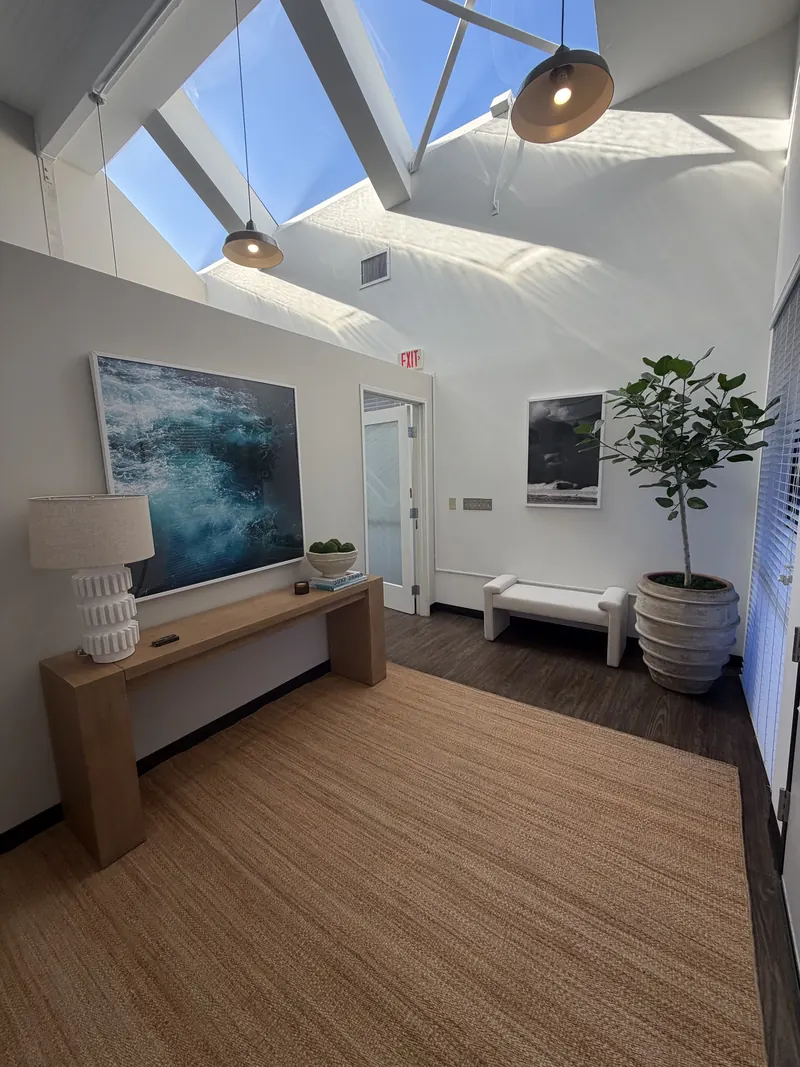
Our office is in the heart of the South Bay. Warm, private, and a world away from the clinical waiting room. For clients throughout California who can't make it in, we deliver the same uncompromising standard of care virtually.
2200 Pacific Coast Hwy, Ste 308, Hermosa Beach · Telehealth statewide
How it works
Starting is simple.
Book a free consultation
A confidential 15-minute call to understand what you need.
Get matched
We pair you with the right clinician for your goals.
Begin care
Start in person or online, at a pace that feels right.
Questions
Frequently asked
What is the best therapy for trauma?
There is no single best approach for everyone. EMDR and trauma-focused cognitive behavioral therapy have the strongest research support for PTSD, and body-based approaches such as Somatic Experiencing help many people whose trauma shows up physically. We match the approach to you and often combine them.
What is trauma-informed care?
Trauma-informed care means the whole experience of therapy is built around safety, choice, and trust. You set the pace, nothing is done to you without explanation, and your clinician pays attention to how past experiences may be shaping your reactions now. It applies to every client, not only people seeking trauma treatment.
How do I find a trauma therapist near Hermosa Beach?
Look for a licensed clinician with specific training in trauma approaches such as EMDR or Somatic Experiencing, who can explain how they would work with your situation and who puts safety and pacing first. Our office is on Pacific Coast Highway in Hermosa Beach, close to Manhattan Beach, Redondo Beach, and Torrance, and we also see clients by video anywhere in California.
What is the difference between trauma and PTSD?
Trauma is the lasting impact of an overwhelming experience. PTSD is a specific diagnosis that can follow trauma, involving intrusive memories, avoidance, changes in mood and thinking, and feeling constantly on alert for more than a month. Many people carry trauma without meeting the criteria for PTSD, and both are worth treating.
Do I have to talk about what happened in detail?
Not necessarily, and never before you are ready. Approaches like EMDR and Somatic Experiencing do not require recounting every detail. Your clinician will explain how each approach works and what it asks of you before you begin.
Can trauma cause physical symptoms?
Yes. Trauma often shows up in the body as tension, pain, stomach problems, fatigue, trouble sleeping, or a startle response that will not settle. Physical symptoms should still be checked by a physician. When the cause is stress and trauma, body-based therapy can help.
What is attachment trauma?
Attachment trauma refers to the effects of early relationships that were frightening, neglectful, or unpredictable. It often shows up later as difficulty trusting, fear of closeness or abandonment, or a harsh inner critic, rather than as memories of one specific event.
Do you offer Somatic Experiencing in Hermosa Beach?
Yes. Carissa Lane, a Registered Associate Marriage and Family Therapist and certified Somatic Experiencing Practitioner (SEP), provides Somatic Experiencing as part of therapy at our Hermosa Beach practice.
When you're ready, a conversation is the place to begin.
Book a complimentary 15-minute consultation, confidential, and without obligation.
Book a free consultation